
PelviLift mechanism guide
How PelviLift works after birth: hammock theory, NMES, and pelvic floor support.
Postpartum pelvic floor changes can feel confusing: leaking, looseness, less sensation during intimacy, heaviness, or a feeling that the core is not holding everything up the way it used to. A simple way to understand these changes is the hammock theory.
After pregnancy and birth, the pelvic floor can become stretched, weak, slow to respond, or hard to feel. PelviLift uses neuromuscular electrical stimulation, or NMES, to help activate weak pelvic floor muscles, support the nerve-muscle connection, and guide repeated training cycles. Its variable-frequency programs are designed to support both endurance-focused and quick-response pelvic floor training.
1. Why do pelvic floor muscles relax after childbirth?
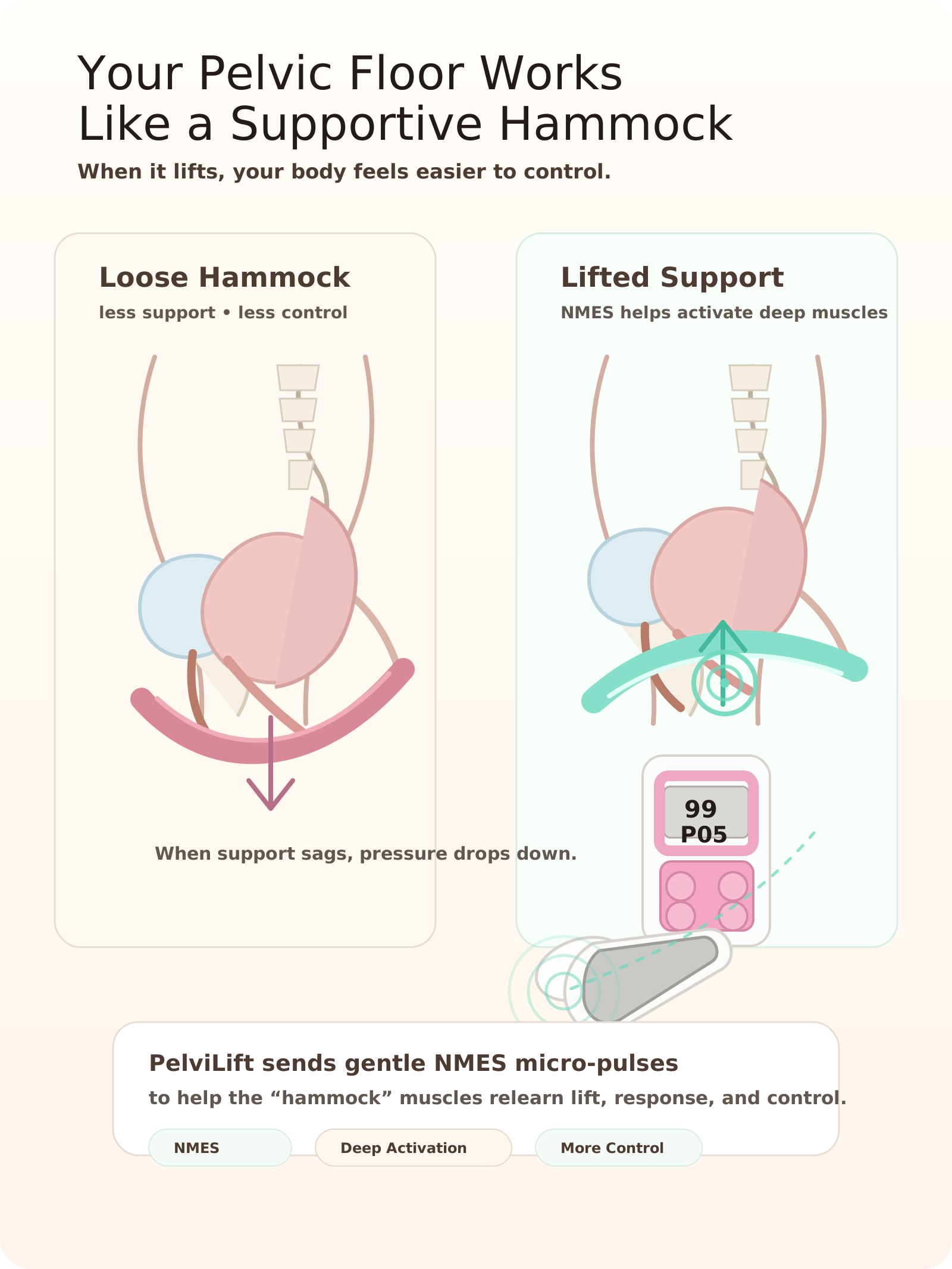
Think of the pelvic floor like a hammock at the base of the pelvis. Before childbirth, that hammock helps support the bladder, uterus, rectum, vaginal tissues, and the deep core. During pregnancy and birth, the hammock has to carry more pressure and may be stretched, fatigued, or less responsive.
Why leaking can happen.
When the hammock is strong and responsive, it can lift and close quickly when you cough, laugh, sneeze, jump, or lift. When it is stretched or slow, pressure can push downward before the pelvic floor responds. That is why some postpartum women leak even when they never leaked before.
Why intimacy can feel different.
The pelvic floor contributes to sensation, tone, and internal support. If the hammock feels loose, numb, or hard to contract, lovemaking may feel less responsive, less firm, or simply different from before birth. This does not mean the body is broken. It means the support-and-sensation system may need retraining.
Why the abdomen and private area can feel loose or heavy.
The pelvic floor works with the deep abdomen, diaphragm, and hips. When the lower hammock is not supporting pressure well, the whole core can feel less organized. Some women describe this as looseness, heaviness, dragging, or a falling-down feeling in the lower belly and private area.
2. Why can electrical stimulation awaken the overall pelvic floor?
PelviLift uses NMES, which stands for neuromuscular electrical stimulation. In simple terms, NMES sends controlled electrical pulses through the pelvic floor area to help create a muscle response. The user does not have to guess as much; the stimulation helps the body feel what activation can be like.
Electrical signals help the nerve-muscle pathway communicate.
Muscles contract because nerves send signals. After birth, that signal pathway can feel unclear: the brain says "contract," but the pelvic floor feels silent, delayed, or hard to isolate. NMES gives the area a clear external cue, helping the user sense activation and repeat it over time.
NMES supports neuromuscular re-education, not instant nerve repair.
It is not accurate to promise that electrical stimulation quickly repairs severed nerves or neurons. The stronger, safer explanation is that NMES can support neuromuscular re-education: it helps the pelvic floor muscles respond, helps the user feel the contraction, and helps the nervous system practice the pattern repeatedly.
Electrical stimulation can help recruit weak muscles.
The pelvic floor includes muscles that need endurance for everyday support and muscles that need quick response for sudden pressure. NMES can help stimulate weak or hard-to-find muscles so training becomes more feelable and consistent.
3. Why variable-frequency stimulation matters.
Pelvic floor training is not one single action. The body needs slow, sustained support and fast, quick-response contractions. That is why Vesdee PelviLift is positioned as a variable-frequency stimulation device: different pulse patterns can support different training goals.
- Lower-frequency or gentler patterns can support awareness, comfort, and endurance routines for muscles that need to hold support over time.
- Higher-frequency or stronger contraction patterns can support fast-response training for moments like coughing, laughing, sneezing, lifting, or movement.
- Repeated sessions help the user move from "I cannot feel it" toward a clearer sense of activation, release, and control.
PelviLift does not just "tighten." It helps make pelvic floor training feelable. The mechanism is activation, signal awareness, repeated contraction-and-rest cycles, and neuromuscular re-education of weak pelvic floor muscles.
What effects can women notice after use?
Results vary, but the expected direction is simple: better awareness first, then better control, then more confidence in daily life. Many users are looking for changes such as:
- Feeling the pelvic floor contract more clearly.
- Less guessing during home pelvic floor training.
- More support during coughing, laughing, lifting, or movement.
- A firmer internal support feeling as strength and response improve.
- More confidence around bladder control and intimacy.
PelviLift should not be described as a guaranteed cure for incontinence, prolapse, sexual dysfunction, pain, or birth injury. It is best described as an at-home pelvic floor NMES device that supports activation, training, and neuromuscular re-education.
When to use caution.
Do not use PelviLift during pregnancy or immediately after childbirth. Postpartum users should wait until they have healed and have clinician clearance for internal pelvic floor devices, especially after tearing, episiotomy, pelvic pain, infection, unexplained bleeding, recent surgery, severe prolapse symptoms, or any medical concern.