Reconnect sensation
Gentle stimulation helps create a perceivable pelvic floor contraction when the area feels numb, vague, or hard to isolate.
 Vesdee
Request kit
Vesdee
Request kit
For pelvic floor PTs and postpartum educators
Vesdee PelviLift is an at-home pelvic floor NMES stimulator designed to help women activate weak or hard-to-find pelvic floor muscles, support bladder-control routines, and rebuild the nerve-muscle awareness many postpartum moms cannot access through verbal cueing alone.
Built on FDA 510(k)-cleared continence stimulation technology. Intended as consumer education and at-home support, not a replacement for individualized pelvic floor PT.
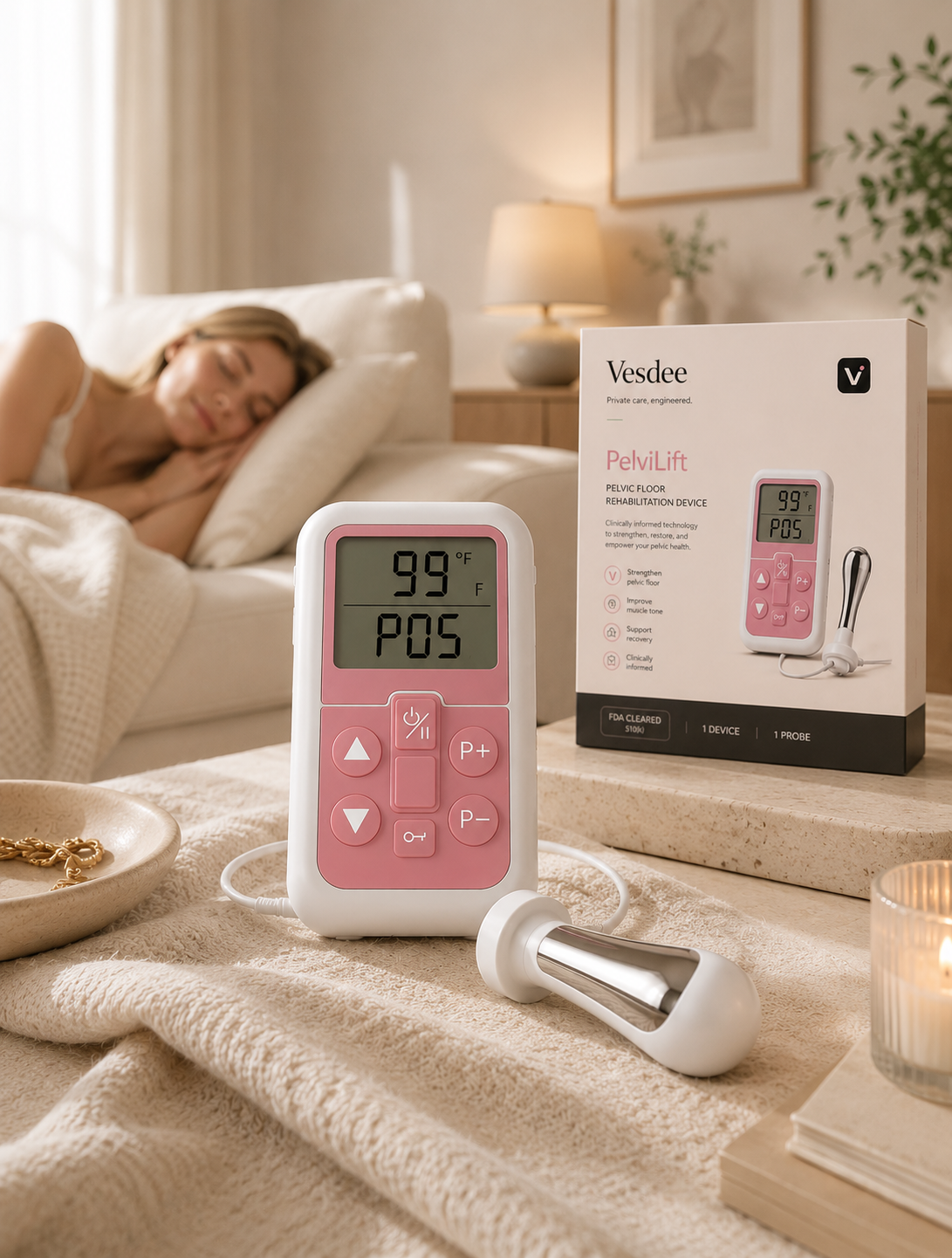
Why postpartum education needs a new entry point
Pregnancy, delivery, stretching, tearing, scar sensitivity, guarding, and months of pressure can leave the pelvic floor weak, slow to respond, or hard to sense. Many moms are told to contract muscles they cannot reliably locate.
PelviLift’s strongest educational angle is not that it replaces skilled PT. It is that targeted stimulation can help make pelvic floor activation feelable, giving postpartum women a clearer starting point for rebuilding awareness, contraction, and control.
Gentle stimulation helps create a perceivable pelvic floor contraction when the area feels numb, vague, or hard to isolate.
Repeated activation and recovery cycles support neuromuscular re-education instead of leaving moms to guess whether anything is happening.
Stronger awareness can support bladder-control routines, firmer internal support, and confidence during movement, lifting, laughing, and daily mom life.
What creators can teach
This positioning gives pelvic floor educators something more useful than a product demo: a teachable framework around sensation, activation, and safe rebuilding.
Explain that pelvic floor training often starts with awareness. If a mom cannot feel contraction or release, guided activation may help her learn what the correct response feels like.
Keep the message focused on weak pelvic floor activation, bladder confidence routines, and support from within. Avoid promising a cure or guaranteed tightening result.
Lead with mechanism and boundaries: NMES, neuromuscular re-education, FDA 510(k) context, contraindications, and the role of PT for pain, prolapse, tearing, or complex symptoms.
Position PelviLift as a bridge from “I cannot connect to this area” toward more consistent home practice, body literacy, and better questions for a clinician.
Professional credibility
PelviLift should be introduced with the same care a pelvic floor educator would use in clinic-facing content: specific, evidence-aware, and transparent about what the device is designed to support.
Evidence-aware language
Collaboration fit
We would love to support educational content for moms who are leaking, feeling loose or disconnected, or struggling to begin pelvic floor training because they cannot yet feel the muscles they are being asked to use.
PelviLift should not be used during pregnancy or immediately after childbirth. Postpartum users should wait until they have healed and have clinician clearance for internal pelvic floor devices, especially after tearing, episiotomy, pelvic pain, infection, unexplained bleeding, recent surgery, severe prolapse symptoms, or any medical concern. Do not use with a pacemaker or implanted electronic device. Individual results may vary.